This is an overview, not legal, tax or insurance advice. Always check your own situation with the Swedish Tax Agency (Skatteverket), your insurer, a lawyer or another relevant adviser before you rent out.
Introduction: why houses suit Airbnb so well
Many people who rent out a house on Airbnb do it because the home stands empty part of the year. It might be a family house during the holidays, a townhouse during a long trip, or a holiday home that is only used a few weeks a year. For the right home, short-term rental can bring in income without renting the house out permanently.
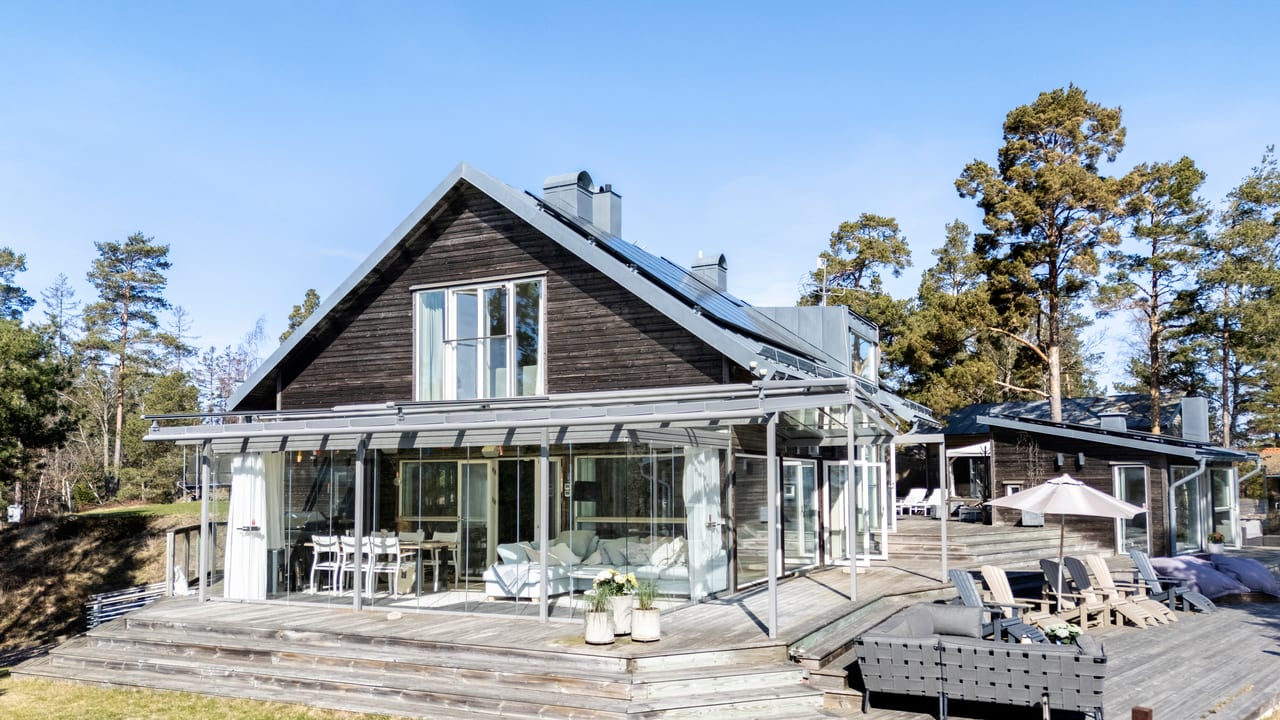
Houses are different from smaller apartments. They often have more beds, a patio, parking, a bigger kitchen, laundry facilities and room for families, groups or longer stays. That widens the audience: families with children, companies, project teams, visiting relatives, tourists, or people who need temporary housing with more space than an ordinary apartment.
At the same time, a house needs more structure. Cleaning takes longer, the instructions need to be clear and guests need to understand how the home works. If the house has a garden, alarm, garage, sauna, pool, fireplace or several floors, a safe setup matters even more.
If you would like a broader guide to the whole process first, start with our guide to renting out on Airbnb in Sweden.
Which houses work best on Airbnb?
Not every house is equally suited to short-term rental. When you want to rent out a house, you need to judge it on location, standard, number of beds, audience and practical management.
A house in an attractive area can work particularly well. That might mean close to the city, the archipelago, water, nature, public transport, large workplaces, event venues or tourist attractions. For some guests, location matters most. For others, it is the space, the beds and the feeling of being able to stay comfortably together.
Standard also matters a great deal. Guests who book on Airbnb expect clear photos, clean rooms, a working kitchen, good beds, proper heating, internet and instructions that make the stay easy. A large house with poor photos or unclear information can perform worse than a smaller house that is presented better.
Operations are another key area. A house can look attractive on paper but be hard to rent out if cleaning, key handover, supervision and guest support do not work. The bigger the home, the more the routines matter.
Detached house, townhouse or holiday home
When we talk about renting out a house, it can mean several kinds of home:
- detached house
- townhouse
- semi-detached house
- holiday home
- summer house
- larger freehold apartment that feels like a house
This guide covers the broad questions: what affects income, which rules apply and what renting out asks of you. If you would rather know how Norli runs the rental for you, see the page on how to rent out a house. If you have a holiday home or a cottage, read more about how to rent out a holiday home.
What affects the income when you rent out a house?
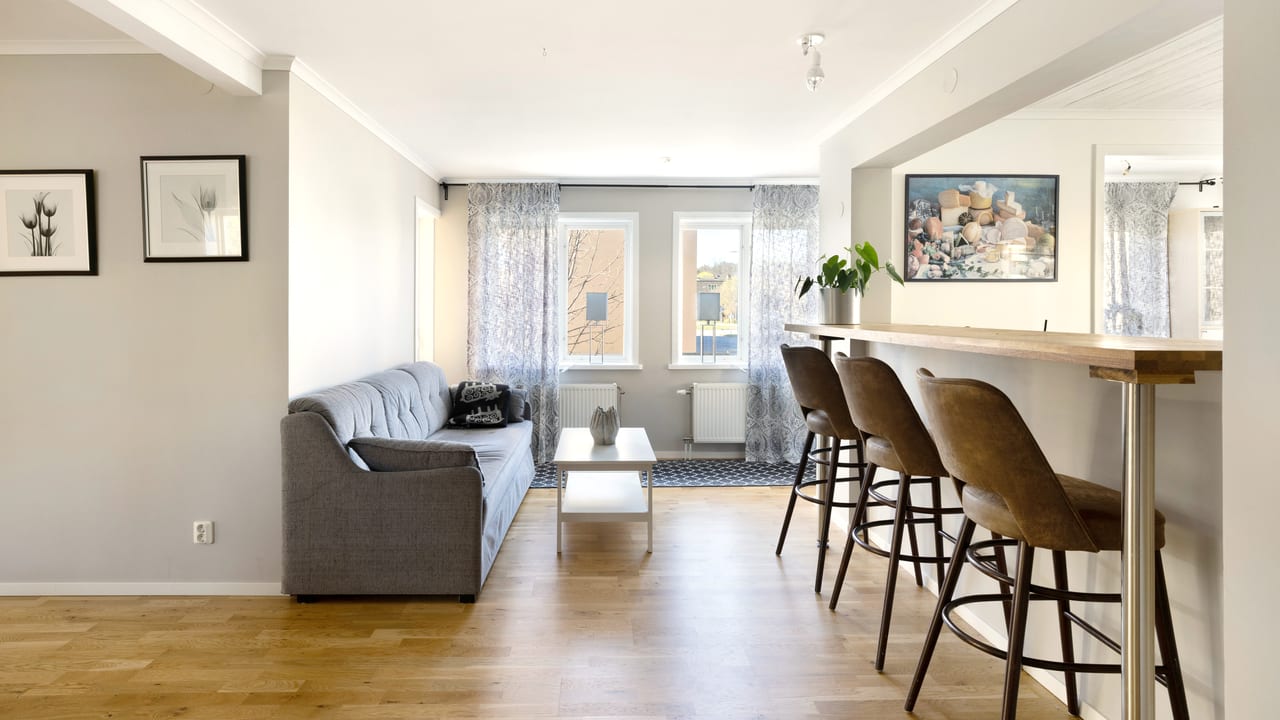
Several factors affect the income. What matters most is not just the nightly rate, but the combination of price, occupancy, season, costs and how much work the rental takes.
Location is often the first factor. A house close to the city, water, the archipelago, nature, workplaces or events can see stronger demand than a house that guests need a car and a lot of planning to reach. Location also shapes which guests are most relevant: holidaymakers, families, companies or longer temporary stays.
The number of bedrooms and beds affects the total price. A house that sleeps several people can often carry a higher booking value than a smaller home, because guests compare the cost per person, family or group. At the same time, the number of beds needs to be reasonable in relation to bathrooms, kitchen and living space.
Standard and condition affect both price and reviews. Guests can accept a simple house if expectations are clear, but they rarely accept vagueness, dirt or things that do not work. Good beds, a working shower, heating, a kitchen, internet and clear instructions often matter more than luxury interiors.
Photos and the listing decide the first impression. The home needs clear photos of bedrooms, kitchen, bathrooms, living areas, entrance, patio and surroundings. If guests cannot understand the layout, the beds or the location, they are less likely to book.
Season and day of the week affect the price. A house near water may see its strongest demand in summer, while a house close to the city or workplaces may work better all year round. Weekends, school holidays, events and public holidays can bring completely different demand from ordinary weekdays.
Parking can matter more than many people think. Houses are often booked by families, groups or companies travelling by car. Several parking spaces, EV charging or easy access can make the home more attractive, especially outside the city centre.
A garden, deck, pool, sauna or a location near a lake or the sea can raise the value, because they create a clearer experience. For families, a garden can be important. For holiday bookings, a sauna, barbecue area, swimming spot or view can affect both price and occupancy.
Being able to offer longer stays can be important for companies, project teams or people who need temporary housing. A house with a washing machine, a workspace, good internet and a practical kitchen can be more attractive for longer bookings than for short weekends only.
Cleaning and operations affect the net result. A large house can bring higher income, but it also takes longer to clean and check. If every booking takes a lot of work, the price and length of stay need to reflect that.
For a more general look at the income side, read our guide on how much you can earn on Airbnb.
Should you rent out per night, per week or for longer?
When you rent out a house on Airbnb, you need to decide what kind of bookings you want. Not every setup suits every home.
Short stays give flexibility and a chance to fill gaps in the calendar. They can suit weekends, events, tourism or temporary needs. A house close to the city, the archipelago, large workplaces or popular day-trip destinations can work for guests who want to book two to three nights. The downside is that every booking needs cleaning, communication, a check and a check-in.
Weekly bookings can work better in summer, school holidays or holiday periods. They mean fewer changeovers and often simpler operations. For holiday homes and houses in holiday areas, weekly bookings can be a more natural setup than single nights. They also reduce the risk of cleaning and supervision becoming too intensive.
Longer stays can be interesting for companies, project teams or people who need housing for a limited period. They can mean fewer guest changeovers and more predictability, but they also need clear terms, the right price level and a clear division of responsibility.
A practical example: a house near water can be rented out by the week in July, but as a weekend home in spring and autumn. A house near an industrial area, a hospital project or a large workplace may instead suit longer company stays. A townhouse in an attractive residential area can work for families who need temporary housing during a move, a renovation or a visit.
The best setup therefore depends on the home's location, its audience and how much practical work you want to handle.
Can you rent out a house to companies?
Yes, renting out a house to companies can be possible, and for some owners it is an interesting audience. Companies may need housing for project staff, consultants, temporary teams, construction or installation crews, film productions, event staff or employees working away from home for a limited period.
Company guests often differ from holidaymakers. They usually look for practical housing that works over time: good internet, parking, workspaces, a washing machine, several bedrooms, clear instructions and easy check-in and check-out. They may care less about the holiday feeling and more about function, location and predictability.
Contractually, renting to companies can call for more clarity. It needs to be clear who books, who pays, who actually lives in the house, how long the stay lasts, what happens if there is damage and who the contact person is. If several employees share the house, house rules, responsibility and communication become especially important.
The pricing strategy can also differ. Tourists often compare experience, location and dates. Companies often compare total cost, practicality and alternatives such as hotels or serviced apartments. A lower nightly rate with a longer stay can sometimes be more interesting than short bookings at a higher price. At the same time, the price needs to account for wear and tear, cleaning, electricity, heating, consumption and administration.
Insurance is especially important when renting to companies. There may be more people in the house, longer stays and different use than in an ordinary holiday booking. So always check with your insurer what applies if the house is rented to a company, if several employees live there and if the rental is recurring.
Renting to companies is not automatically easier, but it can be a strong option for the right house. It is especially relevant for homes with several bedrooms, parking, good transport links and proximity to workplaces or project sites.
Tax when you rent out a house on Airbnb
Tax is an important part of the calculation when you rent out a house on Airbnb. If the house is a private home, the rules for renting out a private home normally apply. The Swedish Tax Agency (Skatteverket) states that you can usually make a standard deduction of at most SEK 40,000 per home and year. For a house or a freehold apartment you can normally also deduct 20 percent of the rental income. Any surplus is taxed as capital income.
Source: Skatteverket: Renting out a private home (in Swedish)
Tax and VAT depend on the status of the home, your income, the scale and the setup. Always check current information with the Swedish Tax Agency or an accountant.
It is also important to distinguish between gross income and what you actually keep. Airbnb fees, cleaning, consumption, wear and tear, insurance and tax all affect the net result. Airbnb describes, among other things, different fee models for bookings, such as split fee and single fee.
Source: Airbnb Help Center: What are Airbnb service fees?
For more detail on the standard deduction, VAT, filing your tax return and worked examples, read our guide on tax on Airbnb.
Insurance when you rent out a house
Insurance is one of the most important things to check before you rent out the house. Ordinary home or house insurance can have limitations for short-term rental, especially if you rent out regularly or to many different guests.
Villaägarna, the Swedish homeowners' association, points out that insurance needs to be checked when renting out a holiday home, partly because terms can differ between insurers and setups.
Source: Villaägarna: Renting out your holiday home (in Swedish)
Insurance terms differ between insurers. Always check with your insurer before you rent out the house.
Contact your insurer before the first booking and ask what applies to your particular setup. Lending the house to someone you know is very different from renting it out on a platform to strangers several times a year.
Questions to ask
- Does the insurance cover short-term rental?
- Are there limits if different guests stay several times a year?
- What applies in case of fire, water damage, theft and vandalism?
- Is damage caused by a tenant covered?
- Do I need additional insurance?
- What does Airbnb cover, and what does it not cover?
- Does the insurance cover the garage, storage, pool, sauna or other parts of the property?
- Does the insurance apply if the house is rented to a company?
- Are there specific requirements for supervision, locks or fire safety?
Insurance should be sorted before the first booking. It is hard to fix afterwards if something happens and the terms turn out to be more limited than you thought.
Practical steps before you rent out a house
Renting out a house on Airbnb takes more preparation than just publishing a listing. The house needs to be ready for guests, and you need routines for bookings, cleaning, keys and any problems that come up.
- Decide which periods the house can be rented out. Block your own dates first, especially holidays, school breaks and weekends when you want to use the home yourself.
- Remove personal belongings and lock away what should not be used. Guests need to understand which areas are included and which cupboards, rooms or storage spaces are private.
- Check smoke alarms, locks, electricity, water and heating. Safety and basic functions need to work before the guest arrives, not be fixed during the stay.
- Write clear instructions for the house. Explain heating, rubbish, parking, alarm, wifi, laundry, dishwasher, barbecue, deck, pool, sauna or anything else guests need to understand.
- Set house rules. Rules on number of guests, noise, pets, smoking, parties, parking and departure reduce the risk of misunderstandings.
- Plan key handover or digital check-in. Guests should be able to check in smoothly, while you keep control of keys and access.
- Secure cleaning between stays. A house often needs more cleaning time than an apartment. Plan a margin between bookings so that cleaning and checks can be done properly.
- Check your insurance. Make sure the insurance covers the setup you are planning, especially if you rent out on Airbnb or to companies.
- Decide on a pricing strategy. Do not set the same price all year without thinking through season, weekends, weekdays, audience and length of stay.
- Keep records for tax and fees. Bookings, income, fees, cleaning costs and rental periods need to be easy to follow up.
Instructions reduce the risk of problems
A house often has more practical details than a smaller home. Guests may need to understand how the heating works, where to leave rubbish, how to use the alarm, what applies to parking, how the washing machine or dishwasher works, and whether there are rules for the deck, barbecue, pool, sauna or garden.
Clear instructions reduce the risk of questions, misunderstandings and damage. They also improve the guest experience, which can affect reviews and future bookings.
A good guest guide should ideally include:
- wifi and technical instructions
- bin room or rubbish collection
- parking and charging
- heating and ventilation
- kitchen equipment
- washing machine and drying options
- fire safety
- departure routines
- contact person if something goes wrong
The more the house differs from an ordinary apartment, the more the instructions matter.
Common mistakes when renting out a house on Airbnb
A few mistakes often make the rental harder than it needs to be.
Setting the same price all year. Demand varies between weekdays, weekends, seasons, school holidays and local events. The price should follow the market.
Underestimating the cleaning. A house often takes longer to clean than an apartment. If the cleaning does not work, it shows up in reviews straight away. For houses in the Stockholm area, read more in our guide to Airbnb cleaning in Stockholm.
Not checking the insurance. Insurance should be sorted before the first booking, not after damage.
Having unclear house rules. Guests need to know what applies to noise, number of people, pets, smoking, parking, rubbish and departure.
Not thinking through the audience. A house for families needs to be presented differently from a house for corporate housing or couples' weekends.
Counting gross income as profit. Airbnb fees, cleaning, wear and tear, tax, consumption and administration all affect the net result.
Accepting too many short bookings without a margin. Tight changeovers can create stress, poorer cleaning and more risk of mistakes.
Not having local help. If you do not live near the house, you need someone who can check the home, handle urgent issues and make sure everything works between bookings.
How Norli can help you rent out a house
Norli helps owners who want to rent out their house without doing everything themselves, whether it is a detached house, a townhouse or a holiday home. The work can start with a report that gives a more concrete estimate based on the address, type of home and local conditions.
After that, Norli can help with the listing, photos, copy, pricing, guest screening, guest communication, cleaning coordination, insurance support and follow-up after each stay. For houses, clear instructions, the right audience, seasonal planning and practical operations are especially important.
You can read more about the process on the page How it works and about the Norli Promise.
Frequently asked questions about renting out a house on Airbnb
The answers below are general and should not be taken as legal, tax or insurance advice. Always check your own situation with the Swedish Tax Agency, your insurer or another adviser.
Is it profitable to rent out a house on Airbnb?
Renting out a house on Airbnb can be profitable, but it depends on location, standard, number of beds, season, price, occupancy, costs and how the rental is managed. Larger houses can command a higher total price, but often need more cleaning and operational work.
What should you think about before renting out a house?
Check insurance, tax, cleaning, keys, fire safety, house rules, pricing strategy and how guests will get help if something happens. Also make sure the house is clearly described in the listing.
Can you rent out a detached house on Airbnb?
Yes, renting out a detached house on Airbnb can be possible. A family house can suit families, groups, longer stays or guests who want more space. Read more on Norli's page about how to rent out a house.
Can you rent out a house to companies?
Yes, some houses suit corporate housing, project teams or temporary work stays. Internet, parking, beds, laundry facilities, clear rules, insurance and responsibility then become especially important.
How is renting out a house taxed?
If the house is a private home, the rules for private rental normally apply. You can usually make the standard deduction and, for a house, also deduct 20 percent of the rental income. Read more in our guide on tax on Airbnb.
Does my insurance cover me when I rent out the house?
That depends on the insurance terms. Always check with your insurer before you rent out, especially if you rent out on Airbnb or regularly to different guests.
Can Norli help me rent out a house?
Yes. Norli can help with the report, listing, pricing, guest screening, communication, cleaning coordination and follow-up for detached houses, townhouses and holiday homes.
Next step: see what your house could earn
Renting out a house on Airbnb can be a strong option for the right home, but it takes structure. You need to understand the audience, season, pricing, tax, insurance, cleaning and how guests will be looked after.
Want to see what your home could earn? Get your report from Norli. You can also read more about how to rent out a house, rent out a holiday home or how much you can earn on Airbnb.
See what your house could earn
The report shows price levels by season, estimated occupancy and what renting out could earn over the year. It is based on your address and takes under 10 seconds.
See my potential rent

