This guide is general and should not be taken as legal, tax or financial advice. Rules, insurance, tax, permits and rent levels can vary depending on the type of home, the setup and the scale. Always check your own situation with the Swedish Tax Agency (Skatteverket), your insurer, a lawyer, your housing association (BRF), your landlord or another relevant adviser before you rent out.
- What is short-term rental?
- What is long-term rental?
- The biggest differences
- Comparison table: short-term or long-term rental
- Income: stability or potential
- Flexibility: when do you want to use the home yourself?
- Effort: do it yourself or get help
- Security, insurance and control
- Rules, tax and permits
- Rules on rent and agreements differ between the models
- Scenarios by type of home
- When do owners switch model?
- Short-term rental with help: a middle ground
- How Norli helps you choose the right setup
- Checklist: which setup suits you?
- Frequently asked questions about short-term or long-term rental
- Next step: compare with your own home
Many owners start with the same thought: the home stands empty at times and ought to be able to earn something. The next question is often whether to choose short-term rental or long-term rental.
For many owners the choice between the models is not obvious from the start. It often depends on how the home is used today, how much flexibility the owner wants to keep and how much practical work feels reasonable.
It is a bigger decision than just comparing a price per night with a rent per month. You need to weigh how often you want to use the home yourself, how much responsibility you want to take, what the rules and insurance look like, how the market works in the area and what kind of guest or tenant the home suits.
For a house, apartment or holiday home, both models can be reasonable. Long-term rental often suits you when you want predictability over a longer time. Short-term rental suits you better when you want to stay flexible, use the home yourself between bookings and adapt the price to season and demand.
This guide helps you compare the models without oversimplifying the choice. The aim is not to say that the shorter model is always better. The aim is to show when each model fits, when the risks grow and when professionally managed rental can be a middle ground. If you first want to understand the Airbnb process in general, read our guide to renting out on Airbnb in Sweden.
What is short-term rental?
Short-term rental means renting out the home for shorter periods, often per night, weekend, week or a few weeks at a time. It often happens on platforms such as Airbnb, but can also go through other channels.
For owners of a house, apartment or holiday home, the shorter model is attractive because the setup is flexible. In many cases you can choose which dates the home is available, block periods when you want to use it yourself and adapt the price to season, events and demand.
At the same time, short-term rental needs more ongoing handling than many people think. Every booking means guest contact, check-in, cleaning, follow-up, price adjustments and sometimes problem-solving. That is why the difference between doing everything yourself and having a professional setup can be large.
Short-term rental often works best when the home has good demand, when you want to keep access to it yourself and when you can handle the practical tasks, or get help with them.
What is long-term rental?
Long-term rental means renting out the home for a longer continuous period, often several months or years. It can be a safe and stable model if you do not need to use the home yourself during that time.
The big advantage is predictability. You often have one tenant, one agreement, a monthly income and fewer practical handovers. It can suit you if, for example, you are going to live abroad, move temporarily or want to cut down on administration.
The downside is less flexibility. Once the home is let, you normally cannot use it yourself during the tenancy. If the market, your own situation or demand changes, it is harder to adjust the setup quickly.
For some owners that is exactly right. For others, especially those who want to use a holiday home, house or apartment themselves part of the year, long-term rental can feel too locked in.
One form of longer rental is letting the home furnished or unfurnished to a company that needs housing for its staff, for a month or longer. Read about how we help you with corporate housing.
What is left in the two set-ups is compared in the guide Airbnb or corporate housing.
The biggest differences
When you compare short-term and long-term rental, you should not just look at the gross amount. You need to compare income, risk, work, flexibility and how the home is used.
Long-term rental often gives a more even and predictable income. Short-term rental can give higher income in attractive periods, but the income varies more over the year.
Long-term rental means fewer changeovers. Short-term rental means more bookings, more cleaning and more communication. At the same time, that setup means you can keep an eye on the home more often between stays, especially if there are good routines for checks and cleaning.
Long-term rental ties up the home for a longer time. Short-term rental gives you more control over the calendar. That is often a decisive difference for owners of a holiday home, summer house or a home the family wants to be able to use itself.
Comparison table: short-term or long-term rental
The table below sums up the main differences when you choose between the models for a house, apartment or holiday home.
The table is simplified. The real outcome depends on the type of home, the agreement, permits, insurance, tax, the market and how the rental is run.
Income: stability or potential
One of the most common questions is which model makes the most money. The answer is that it depends on the home.
Long-term rental often gives a stable monthly income. It is easier to plan and can feel safe if the goal is an even cash flow over time.
Short-term rental, on the other hand, can have higher income potential in the right locations, especially where demand varies with season, weekends, holidays, events or tourism. A house in an attractive area, a well-placed apartment or a holiday home near water, nature or skiing can sometimes perform strongly in specific periods.
High potential is not the same as certain income. The setup needs the right presentation, the right price, good reviews, fast guest communication and working operations. If the listing is weak, the price wrong or the cleaning uneven, income can be lower than expected.
To understand the income side more concretely, read our guide on how much you can earn on Airbnb or get your report for an estimate based on your home.
Flexibility: when do you want to use the home yourself?
Flexibility is often the biggest practical difference between short-term and long-term rental.
With long-term rental you normally hand over the home for a longer period. That can suit you if you do not need to use it yourself. But if you want to stay in the holiday home in summer, lend the house to family for a few weeks or use the apartment between rental periods, the model can be too rigid.
Short-term rental lets you plan the calendar more actively. You can block dates, rent out in periods of high demand and keep the home available when you need it yourself.
For holiday homes this is often especially important. Many owners do not want to rent out the whole season, only the dates when the home would otherwise stand empty. The same can apply to a house or apartment when the owner travels, works elsewhere or has periods when the home is not used.
Effort: do it yourself or get help
Long-term rental often takes more work at the start, but less day-to-day running. You need to find a tenant, write an agreement, check the rules and handle practical questions before move-in. After that, contact is often more limited, even though problems can arise.
Short-term rental means more recurring work. Guests ask questions, bookings change, prices need adjusting, cleaning has to be coordinated and the home needs follow-up. That can be enjoyable if you like hosting, but a burden if the goal is passive income.
The effort varies and is normally higher with short-term rental, especially if you do it yourself. In busy periods, many small tasks can take more time than the booking itself: answering questions, checking the calendar, adjusting prices, coordinating cleaning, handling check-in and following up on the home after each stay.
With professional help, the owner's own time can drop considerably. The work then lies in structure, management, cleaning coordination, guest communication and follow-up instead. For more on that comparison, read our guide on whether to manage Airbnb yourself or get help.
Security, insurance and control
Security looks different in the two models.
With long-term rental you often have fewer people in the home, but one tenant uses it for a long time. That can feel stable, but it also means you do not have the same ongoing view of the home's condition.
With short-term rental there are more changeovers, but also more natural opportunities to check the home between stays. With the right routines for cleaning, documentation, guest screening and follow-up, control can be greater than many people think.
Insurance, permits and responsibility need to be checked in both models. With short-term rental it is especially important to understand what may apply to home insurance, house insurance, bostadsrätt (tenant-owned apartment) insurance, holiday home insurance and the platform's own host protection. Standard policies can have limitations for this kind of rental, and host protection from a platform should not be seen as a replacement for your own insurance.
Read our guide on Airbnb insurance if you want to understand how to handle the question of security in a more structured way.
Insurance terms and permits can differ between insurers, types of home and setups. Always check what applies to your own home before renting out.
Rules, tax and permits
Both short-term and long-term rental require you to check the rules for your home. That can include tax, deductions, VAT, the housing association's rules, the landlord's permission, insurance and what is allowed under the agreement or the association's statutes.
For a bostadsrätt, the board's consent often needs to be checked if someone else is going to use the home independently. If the association says no and the member wants to take it further, the matter can be tried by the Rent Tribunal (hyresnämnden). For a rental apartment you should be especially careful and check with the landlord before any kind of subletting.
Tax depends on the type of home, income, deductions and setup. For a private home there is, among other things, a standard deduction and other deductions that can affect taxation. When you rent out on digital platforms, information about sellers and income can be reported to the Swedish Tax Agency under the DAC7 rules. That does not mean the tax is automatically calculated for you, but it makes it extra important to keep bookings, fees, payouts and rental periods on record. Read more in our separate guide on tax on Airbnb.
Norli's guides are general and should not replace individual legal or tax advice. Always check your own situation with the Swedish Tax Agency, a lawyer or an accountant.
Rules on rent and agreements differ between the models
The rules on rent, agreements and letting often differ between shorter and longer rental, but they cannot be simplified into a single rule that applies to every home.
With longer rental, questions about reasonable rent, agreements, security of tenure and tenancy law often become more important. That applies especially if the home is let for long continuous periods or if the setup resembles a traditional tenancy.
With short-term rental, other questions become more central: platform terms, changeovers, insurance, permits, association rules, cleaning, keys and documentation. It can also be important to distinguish between privately renting out your own home and more extensive rental that may be assessed differently.
For a bostadsrätt, read our guide on renting out a bostadsrätt on Airbnb in particular. This article does not go through the bostadsrätt rules in detail, but focuses on the choice between the models.
Scenarios by type of home
The type of home and its location strongly affect which setup fits. In practice, the choice between the models looks different for a house, an apartment, a holiday home and a cottage. Here are four typical situations.
A house in Stockholm or near a larger city
For a house near a larger city, the shorter setup can suit families, business travellers or guests who want more space than a hotel. That can apply to houses near public transport, water, event venues, nature or large workplaces.
This often fits when the owner wants to use the house between bookings. Long-term rental may suit better if the owner will be away for a long time. For a house, operational questions become important: the garden, garage, rubbish, alarm, cleaning and keys. Read more in our guide on how to rent out a house on Airbnb.
An apartment in Stockholm
For an apartment in Stockholm, the shorter model can be attractive if the location is strong, for example near the city centre, public transport, workplaces, events or popular neighbourhoods. At the same time, rules and permits are often more important than for a detached house.
If the apartment is a bostadsrätt, the association's rules and the board's consent need to be checked. If it is a rental apartment, you should be especially careful. For more detail, read our guide on renting out an apartment in Stockholm on Airbnb.
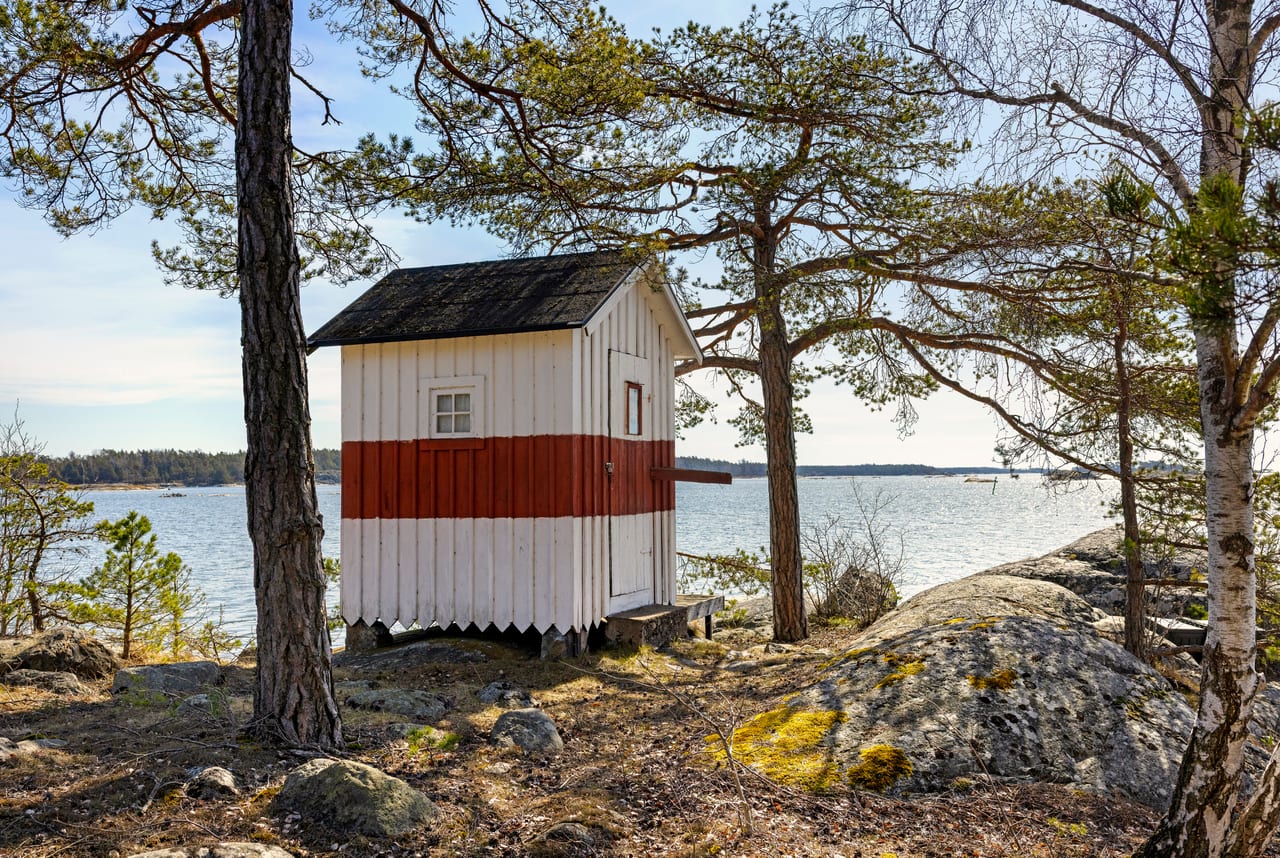
A holiday home in the archipelago, the mountains or on the coast
For holiday homes, the season often decides a great deal. A holiday home in the archipelago, the mountains or a coastal area can have very strong demand in certain weeks and weaker demand in other parts of the year.
The shorter setup often fits when the owner wants to use the house part of the year but rent out selected periods. For holiday homes, supervision, cleaning, water, heating, weather and local suppliers become especially important.
A cottage in a nature or holiday area
A cottage in a nature or holiday area can work well for shorter rental if guests are looking for simplicity, nature, swimming, hiking, skiing or relaxation. Demand here can be strong at weekends, during school holidays and at seasonal peaks.
Long-term rental may be more relevant if the cottage is winterised and suits someone who wants to stay for longer periods. But many cottages are most attractive precisely as holiday homes. To read more, see our guide on how to rent out a cottage on Airbnb.
When do owners switch model?
Many owners start with one model and switch later. That is common and often wise. The first model gives you experience, and it also shows what works in practice.
Some start with long-term rental and switch to shorter rental when they realise they want to use the home themselves now and then. That can apply to holiday homes, houses or apartments where the family's needs change over the year.
Others start with the shorter model and switch to long-term rental when they no longer want to handle changeovers, cleaning and operations. If you do everything yourself, the effort can be greater than expected.
Some combine the models. A holiday home can be let for longer periods in the low season and shorter periods in summer. A home can be let during a long stay abroad, but for shorter periods during holidays in other years.
The important thing is not to see the choice as permanent. The right setup can change when the home, the market or your own everyday life changes.
Short-term rental with help: a middle ground
Many people compare short-term and long-term rental as if the options were entirely simple: either you do everything yourself on Airbnb, or you let long-term and passively. In practice there is a middle ground.
Professionally managed rental can give a combination of flexibility and relief. You keep control of the calendar, but get help with the listing, pricing, guests, cleaning, insurance support and follow-up.
With Norli, Norli rents the home from you for the periods it is let and in turn rents it out to the guests. Norli reports the VAT on the guests' bookings, so you do not normally need to register for VAT for the short-term rental. Norli's commission is 20–25 percent of what is left after VAT and platform fees, and what is included is in the guide to what Airbnb management costs. Read more about how to rent out your house, rent out your apartment or rent out your holiday home with Norli.
That means the model does not have to be as time-consuming as doing it yourself. For many owners of houses, apartments and holiday homes, this is exactly what makes the model interesting. The home can earn when it would otherwise stand empty, while the owner avoids many of the practical tasks.
To see how a professional setup works in practice, read more about Norli's Airbnb management for houses, apartments and holiday homes.
How Norli helps you choose the right setup
Norli helps owners understand whether shorter rental is relevant for their home. We start with a report based on the address, type of home and local conditions. Then we can go through the potential, limitations, season, setup and practical questions.
If the setup fits, Norli can help with the listing, pricing, guest screening, guest communication, cleaning coordination, insurance support and follow-up. If your situation points more towards long-term rental, that is also important to understand early.
If the home is free for a longer period, we can also help you let it to a company, furnished or unfurnished, for a month or longer.
Our aim is not to squeeze every home into the same model. The aim is to give you a better basis for the decision, so you can choose a setup based on the home, risk, income and control.
Checklist: which setup suits you?
Ask yourself these questions before you decide:
- Do I want to be able to use the home myself?
- Is the home attractive for short stays?
- Is there a strong season or periods of high demand?
- Do I want a stable monthly income or flexible income potential?
- How much time do I want to spend on guests and operations?
- Do I live close to the home?
- Have I checked my insurance?
- Have I checked tax and rules?
- Is it a house, an apartment or a holiday home?
- Do I want to do everything myself or get help?
If flexibility, season and control matter, the shorter model may be more relevant. If stability and little ongoing administration weigh more, long-term rental may be better.
Frequently asked questions about short-term or long-term rental
The answers below are general and should not be taken as legal, tax, insurance or financial advice. Always check your own situation with the Swedish Tax Agency, your insurer, your housing association, your landlord or another relevant adviser.
Is short-term rental better than long-term rental?
Not always. Short-term rental can be better if you want flexibility, to use the home yourself and to make the most of periods of high demand. Long-term rental can be better if you want stability, fewer handovers and a more predictable monthly income.
How much more can you earn from short-term rental?
Short-term rental can bring higher income in attractive periods, but it is not certain. The outcome depends on the home, location, season, price, occupancy and how the rental is run.
What counts as short-term rental?
Short-term rental is normally renting out for shorter periods, for example per night, weekend, week or a few weeks at a time. The exact assessment can depend on the setup, type of home, agreement and scale.
What counts as long-term rental?
Long-term rental normally means the home is let for a longer continuous period, often several months or more. It is closer to a traditional tenancy and needs a clear agreement and a check of the rules.
Can you combine short-term and long-term rental?
In some cases the models can be combined, for example longer rental in the low season and shorter rental in the high season. That requires the rules, agreements, insurance and practical operations to work for both setups.
Which is safer?
It depends on what you mean by safe. Long-term rental can mean fewer tenants and more stable income. Short-term rental means more changeovers but also more chances to check the home between stays. Security depends on the agreement, insurance, guest screening, cleaning and follow-up.
When does short-term rental work best?
Short-term rental often works best when you want to stay flexible, use the home yourself now and then and rent out in periods with demand. It can be especially relevant for houses, apartments and holiday homes in attractive locations.
When does long-term rental work best?
Long-term rental works best when you do not need to use the home yourself for a longer period and want a more stable monthly income. It can be right during a long stay abroad, a temporary move or if you want to reduce ongoing administration.
Which takes the most work?
Short-term rental normally takes more ongoing work with guests, cleaning, pricing and follow-up. Long-term rental takes more work before the agreement and move-in, but often less ongoing handling.
How does insurance affect the choice?
Insurance needs to be checked in both models. With short-term rental you should ask specifically about short stays, guests, damage, keys, contents and any platform. With long-term rental you need to check what applies to a longer letting.
Can Norli help me compare the options?
Yes. Norli's report gives an estimate of what your home could earn from short-term rental. It can help you compare flexibility, potential and the practical setup before you decide.
Should I start with short-term or long-term rental?
Start with your goal. The choice between short-term and long-term rental should be based on whether you want flexibility and to be able to use the home yourself, or would rather have stability and a longer tenancy.
Next step: compare with your own home
The choice between short-term and long-term rental is not just about the market. It is about your home, your everyday life and how much responsibility you want to take yourself.
Want to understand what your house, apartment or holiday home could earn from short-term rental? Get your report for an estimate based on the address, type of home and local conditions.
See what your home could earn
The report shows price levels by season, estimated occupancy and what renting out could earn over the year. It is based on your address and takes under 10 seconds.
See my potential rent

